
Showing posts with label Taino. Show all posts
Showing posts with label Taino. Show all posts


3.27.2013
Taino in the Southeast US pre-1492
[Taino Indians lived at least as far north as the Smoky Mountains. ¿Como? ¿Puertorriqueños en América del Norte antes de que Cristóbal Colón? ¡Por seguro! Forensic geologists and Native American scholars are opening the flood gates of new knowledge about North America’s past.]

The petroglyphs from Arecibo, PR and Atlanta, GA both portray a Taino guardian spirit.
Puertoricans came to North America before Columbus, March 12, 2013, Examiner.com
The petroglyphs from Arecibo, PR and Atlanta, GA both portray a Taino guardian spirit.
Puertoricans came to North America before Columbus, March 12, 2013, Examiner.com
5.24.2009
3.17.2009
Tracing Taíno Ancestry in Puerto Rico
 Tracing Taíno Ancestry in Puerto Rico is a paper by Margarita Santori López. While there are no new revelations or findings, she does a nice job of summarizing the Taíno mitochondrial research of Dr. Juan Carlos Martínez Cruzado.
BTW: I believe that the mentioned research that was to be published last year by Martinez Cruzado also showed Taíno mtDNA present in Hispaniola--albeit in a smaller percentage of the population than is the case in Puerto Rico.
The following is an excerpt:
At the beginning of his research Martínez Cruzado searched for Taíno ancestry by extracting mtDNA from bones. This technique was discarded because the results did not show variety in the genetic material extracted, and the technique was too expensive and complicated.See more posts on the Taíno.
The professor, then decided to collect hair, saliva and blood samples from people with typical Taíno traits to obtain their mtDNA. Between 1998 and 1999, the investigation was based on analyzing the mtDNA of voluntaries from UPRM and Indieras, Maricao. The study revealed a higher incidence of Taíno DNA in people from Indieras whose physical appearance resembled Taínos: black hair and slanted eyes.
The professor then obtained funding from the National Foundation of the Science of United States to analyze the mtDNA of a representative sample in Puerto Rico. Martínez Cruzado found 19 maternal lineages; nine of which have enough frequency and variability to suggest that they go back to the pre-Columbian period. “All the members of each lineage share a great-great-grandmother. These great-great-grandmothers are responsible for all the lineages in the world and share an African great-great-grandmother,” explained the scientist.
The study shows that the majority of the Indian lineages in Puerto Rico originated in the Amazonic region.
3.07.2009
The History, Music and Culture of the Indigenous Taíno People - 3.20.09 @ The New York Open Center
This evening, indigenous activist, historian, artist, musician and storyteller Roberto Borrero, one of only a handful of actual Taino descendants who are considered authorities on the ancient Taino culture, will introduce us to the history, creation stories, spirituality, music and song of the first indigenous people encountered by Columbus in 1492.
The program will include stunning slides and a performance of Taino music by Roberto and other members of the Cacibajagua Taino Cultural Society, an organization dedicated to the promotion of Taino culture.
AN EVENING EVENT
Friday, March 20, 7:30pm
The New York Open Center
83 Spring Street (Btw B'way and Lafayette Sts.)
212-219-2527 Ext.2
www.opencenter.org
Program #09WSN14P
Members: $18/Nonmembers: $20
Location: The New York Open Center, 83 Spring Street
(Btw B'way and Lafayette Sts.)
Contact: www.opencenter. org
Source: UCTP - email: la_voz_taino@yahoo.com
The program will include stunning slides and a performance of Taino music by Roberto and other members of the Cacibajagua Taino Cultural Society, an organization dedicated to the promotion of Taino culture.
AN EVENING EVENT
Friday, March 20, 7:30pm
The New York Open Center
83 Spring Street (Btw B'way and Lafayette Sts.)
212-219-2527 Ext.2
www.opencenter.org
Program #09WSN14P
Members: $18/Nonmembers: $20
Location: The New York Open Center, 83 Spring Street
(Btw B'way and Lafayette Sts.)
Contact: www.opencenter. org
Source: UCTP - email: la_voz_taino@yahoo.com
1.05.2009
Pasteles are Taino by Roberto Borrero
 Of course, pasteles are Taino. What else would they be? Masa from guineo, yuca and yautia with a tasty filling, wrapped in banana leaves with a schmear of achiote, and cooked in a large kettle, couldn't be anything but a Taino delicacy. And, of course, guanimes -- my childhood favorite.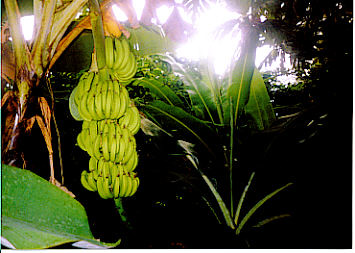

Here's an excerpt from Roberto Múcaro Borrero's Pasteles are Taino:
Even today, making pasteles is still a family affair, for example, your Mom might grate the yucca or guineo, while an aunt will prepare the masa, grandma could be seasoning the meat to perfection, and a cousin can literally wrap the whole process up nicely.Full article published in La Divina Latina
As I understand it, in Boriken, there were at least three and possibly more original “pasteles” - one made from mais (corn), one from yuka, and another from yautia. If you thought you were the only Boricuas making pasteles from yuka, my sisters and brothers, – we Tainos taught you that hundreds of years ago.
In fact, yuka and yautia are Taino words. “Mais” derives from the Taino word maisi. And the Taino word for pasteles made from corn is guanime.
12.02.2008
National Indigenous Festival of Jayuya: Celebrating Our Taíno Heritage
 Today's NYTimes includes a story on the National Indigenous Festival of Jayuya, it's pageant, and the growing importance among Puerto Ricans of our Taíno roots. Here's an excerpt of the story as well as a link to the accompanying photo series:
“It’s different,” said Félix González, president of the National Indigenous Festival of Jayuya, of which the pageant is a part. “It’s not white culture and blue eyes; it says that the part of our blood that comes from indigenous culture is just as important.”
Puerto Ricans have long considered themselves a mix of African, European and Native American influences. But since the 1960s, the Taíno — a tribe wiped from the Antilles by European conquest, disease and assimilation — has come to occupy a special place in the island’s cultural hierarchy.
The streets of Old San Juan are lined with museums and research centers dedicated to unearthing Taíno artifacts and rituals. Children are taught from a young age that “hurricane” is Taíno in origin, from the word “huracán,” while no Latin pop music concert is complete without a shout out to Boricuas — those from Borinquen, the Taíno name for Puerto Rico, which means “land of the brave noble lord.”
The ties may be more than cultural. In 2003, Juan Martinez Cruzado, a geneticist at the University of Puerto Rico at Mayagüez, found that at least 61 percent of Puerto Ricans possess remnants of Taíno DNA — and nearly all seem to believe they belong in that group.
“The Indian heritage is very important because it unites the Puerto Rican community,” said Miguel Rodríguez López, an archaeologist with the Center for Advanced Studies of Puerto Rico and the Caribbean, an independent graduate school in San Juan. “There is a feeling that it represents our primary roots.”
He added, “It is our symbolic identity.”
8.08.2008
Indigenous Peoples Day at The American Museum of Natural History
The American Museum of Natural History
presents
Indigenous Peoples Day
Saturday, August 9
12 noon-5:00 p.m.
Kaufmann Theater, first floor
Free with Museum admission
In recognition of the United Nations' International Day of the World's Indigenous Peoples, this afternoon features a special concert performance with Halau I Ka Wekiu from Hawai'i as well as an indigenous Caribbean cultural presentation by members of the Cacibajagua Taino Cultural Society.
"Yarning Up", a short film series focusing on Northern Australian
Aboriginal stories, will also be featured.
An Indigenous Artisan Showcase will take place in the Museum's Grand Gallery.
This program is cosponsored with the Secretariat of the United Nations Permanent Forum on Indigenous Issues, the NGO Committee on the United Nations International Decade of the World's Indigenous Peoples, the Tribal Link Foundation and the United Confederation of
Taino People.
1:00 p.m. - Halau I Ka Wekiu
Hawaiian Hula School Performance
2:00 p.m. - "Yarning Up: 4 Short Stories from the Top End"
Australian Aboriginal Short Films
Screening with introduction and Q&A by Producer Penny Smallacombe
3:00 p.m. - Halau I Ka Wekiu
Hawaiian Hula School Performance
4:30 p.m. - Cacibajagua Taino Cultural Society
12noon – 5:30pm: An Indigenous Artisan Showcase, Grand Gallery, First Floor
Several indigenous artists including Jude Norris (Cree) and Taino Spirit will display their works throughout the day.
presents
Indigenous Peoples Day
Saturday, August 9
12 noon-5:00 p.m.
Kaufmann Theater, first floor
Free with Museum admission
In recognition of the United Nations' International Day of the World's Indigenous Peoples, this afternoon features a special concert performance with Halau I Ka Wekiu from Hawai'i as well as an indigenous Caribbean cultural presentation by members of the Cacibajagua Taino Cultural Society.
"Yarning Up", a short film series focusing on Northern Australian
Aboriginal stories, will also be featured.
An Indigenous Artisan Showcase will take place in the Museum's Grand Gallery.
This program is cosponsored with the Secretariat of the United Nations Permanent Forum on Indigenous Issues, the NGO Committee on the United Nations International Decade of the World's Indigenous Peoples, the Tribal Link Foundation and the United Confederation of
Taino People.
1:00 p.m. - Halau I Ka Wekiu
Hawaiian Hula School Performance
2:00 p.m. - "Yarning Up: 4 Short Stories from the Top End"
Australian Aboriginal Short Films
Screening with introduction and Q&A by Producer Penny Smallacombe
3:00 p.m. - Halau I Ka Wekiu
Hawaiian Hula School Performance
4:30 p.m. - Cacibajagua Taino Cultural Society
12noon – 5:30pm: An Indigenous Artisan Showcase, Grand Gallery, First Floor
Several indigenous artists including Jude Norris (Cree) and Taino Spirit will display their works throughout the day.
6.15.2008
Peace and Dignity Journeys 2008
 Peace and Dignity Journeys are spiritual runs that embody the prophecy of the Eagle and Condor.
This prophecy mandates that at this time all Indigenous Peoples in the Western Hemisphere shall be reunited in a spiritual way in order to heal our nations so we can begin to work towards a better future for our children and generations to come.
Through the Journeys, participant runners and supporters work to accomplish this goal by helping each other reconnect to their respective spiritual practices and traditions; by helping each other relearn our role in the world as Indigenous Peoples; and by reminding each other of our responsibilities to Mother Earth, Father Sky, our communities, and ourselves.
Peace and Dignity Journeys occur every four years and start with Indigenous runners on opposite ends of the continents (Chickaloon, Alaska and Tierra del Fuego, Argentina).
They run for six months through hundreds of Indigenous communities where they participate in their respective spiritual practices and traditions; spark dialogue on the issue of peace and dignity for Indigenous Peoples; model their responsibility to Mother Earth, Father Sky, communities, and themselves; and receive the community’s prayers. These prayers and conversations are then carried to proceeding communities until the runners reach the center of the hemisphere.
When the runners meet at the Kuna Nation in Panama City, Panama, it will symbolize all Indigenous Peoples joining together in a spiritual way to manifest the prophecy of the Eagle and Condor.

11.01.2007
Ancient Taino Settlement Discovered in Southern Puerto Rico
 Large Ancient Settlement Unearthed in Puerto Rico, National Geographic News - 10.29.07
Bodies, structures, and rock art thought to belong to an indigenous pre-Columbian culture have been unearthed at an ancient settlement in Puerto Rico, officials recently announced.
Archaeologists say the complex—which dates from A.D. 600 to 1500—could be the most significant of its kind in the Caribbean.
More
Related:
Major archaeological find in Puerto Rico
Puerto Rican archaeologists accuse U.S. Army Corps of taking artifacts without permission
Local Indigenous Peoples Concerned over New Archeological Find in Puerto Rico
Declaraciones del Consejo General de Tainos Borincanos y el Caney 5to Mundo en torno al hallazgo del yacimiento Tibes/Bucana Baramaya (Portugués)
10.07.2007
Bartolomé de las Casas: Witness to Evil
 Bartolomé de las Casas (1484-1566)
Bartolomé de las Casas, a Spanish colonist, a priest, founder of a Utopian community and first Bishop of Chiapas, was a scholar, historian and 16th century human rights advocate. Las Casas has been called the Father of anti-imperialism and anti-racism. Others take a more guarded or modest view of his achievements. What there is little or no dispute about is that Las Casas was an early and energetic advocate and activist for the rights of native peoples.
Las Casas came to the Indies early, he knew Columbus and was the editor of the Admiral's journal. He knew conditions in the Americas first hand. As the reading in our packet indicates, he was present during Spanish genocidal attacks on the native population of Cuba.
After coming to the realization that the Spanish treatment of the native population was unconscionable, Las Casas became a Dominican priest, and began travelling back and forth accross the Atlantic. He was in part responsible for the repeal of the laws which allowed the Indians to be used in what amounted to slave labor gangs. This was the econmienda system. Government officials were willing to go along with this attempt to end the system for they feared that a new class of feudal lords would arise in the colonies. The Spanish colonists were outraged at this interference. Las Casas attempted to set up a colony on the coast of Venezuala where the native people would be treated properly. It failed largely because of the bad example set by the colony's neighbors.
Because of preassures from the colonists, the encomienda system was restored. Las Casas returned to Spain and was eventually able to bring about the great debate of 1550 in the Spanish capital of Valladolid between Las Casas and the advocate for the colonists Juan Gines de Sepulveda. The excerpt in our packet is from Las Casas' account of the debate.
The advocates of the encomienda system eventually triumphed. When the government realized that it might lose Peru to colonists revolting over this issue, it gave in. Still, Las Casas is a shining example of resistance to the ill treatment of native peoples. His works were translated accross Europe. He likely influenced the French essayist Montaigne's views about the new world.
Las Casas Time Line
1484 Born in Seville to Pedro de Las Casas, a small merchant wealthy enough to send his son to learn Latin in the academy at the cathedral of Seville in 1497. Many older sources give 1474 as the year of his birth.
1502 Leaves Spain for Hispaniola in the West Indies with the governor, Nicolas de Ovando. He earns an encomienda for his participation in several expeditions and then proceeds to evangelize the Indians.
1506 Returns briefly to Europe where he is ordained a deacon in Rome.
1511 On August 15, Pentecost Sunday, listens to a sermon by a Dominican priest, Father Antonio de Montesinos on the text "I am a voice crying in the wilderness," denouncing Spain's treatment of the Indians. As a result Las Casas returns his Indian serfs to the governor and the rest of his life is to be spent in defense of the Indian.
1512 Becomes first priest to be ordained in the New World.
1513 Takes part in the violent and bloody conquest of Cuba and receives Indian serfs for his efforts.
1515 Returns to Spain to plead the Indian cause before King Ferdinand. With the support of the archbishop of Toledo, Francisco Jimenez de Cisneros, is named priest-procurator of the Indies.
1516 In November returns to America as a member of a commission sent to investigate the treatment of the Indians.
1519 Returns to Spain once more.
1520 Presents a defense of the Indian to King Charles I (Emperor Charles V) arguing that the time of military conquest of the Indians has passed and that they could be converted by more peaceful means. After much debate the king sides with Las Casas and supports his plan to build a colony of farm communities in present-day Venezuela inhabited by both Spanish and free Indians. Las Casas sets sail in December.
1522 In January, after more than a year of continuous opposition of local encomenderos who incite Indian attacks on the farmers, the experiment fails.
1523 Disappointed in the results of his political activities, Las Casas joins the Dominicans in Santo Domingo and focuses his energy on writing. Over the next several years he will write several works including the treatise "Concerning the Only Way of Drawing All Peoples to the True Religion" and the beginnings of both Apologetica historia de las Indias and Historia de Las Indies.
1530 Returned to Spain and obtained a royal decree prohibiting the enforcement of slavery in Peru which he delivered personally.
1537 Receives some support from the Pope in the form of Paul III's bull Sublimis Deus which declared the American Indians as rational beings with souls and that their lives and property should be protected.
1542 Returns to Spain where he convinced Charles I to signs the "New Laws" which prohibited Indian slavery and attempted to put an end to the endomienda system by limiting ownership of serfs to a single generation. Writes his most influential and best known work, "A brief report on the Destruction of the Indians," which horrifies the court.
1544 To ensure enforcement of the laws he is named bishop of Chiapas in Guatemala and sets sail in July. Upon arrival meets immediate opposition. He declares in his tract Confesionario that any Spaniard who refuse to release his Indians is to be denied absolution. Many members of his clergy refuse to follow this order. A year later the inheritance limitation is rescinded by Charles V.
1547 Returns to Spain and gives up his episcopal dignity. Becomes an influential figure at court and at the Council of the Indies. Begins conflict with Juan Gines de Sepulveda who defends Spain's treatment of the Indians on Aristotelian principles.
1550 At the order of Charles I meets Sepulveda in the famous debate at the Council of Valladolid. While Las Casas convinced the theologians who presided over the debate and received official approval it was Sepulveda's teachings which largely prevailed in the Indies.
1552 Without clearance from the Inquisition, publishes The Destruction of the Indies. Spends the next fourteen years writing and appearing at court and councils in defense of the Indians.
1566 Dies in Madrid and buried in the convent chapel of Our Lady of Atocha.
1875 Historia de las Indias first published.
Time Line Sources
"Las Casas, Bartolome de" Encyclopedia Britannica. 1957Related:
Las Casas, Bartolome. Devastation of the Indies. Ed. Bill M. Donovan. Trans. Herma
Briffault. Baltimore: The Johns Hopkins University Press, 1992.
Hanke, Lewis. Bartolome de Las Casas. Philadelphia: University of Pennsylvania Press, 1952.
Brief Account of the Devastation of the Indies by Bartolomé de las Casas (1542)
How Columbus Day Harms American Indians (by Glenn Morris, Indian Country Today - 10.4.07
8.14.2007
Unity Run for Health and Identity
 Run focuses on identity for American Indians (by James Lomuscio, The Advocate - 8.11.07)
Stamford - More than 50 people huddled around afire yesterday in the mammoth teepee, with smoke venting through a latticework of logs lashed at the top.
It was 3 p.m., time for the sacred talking circle. Only members of the American Indian tribes gathered for a journey were permitted inside.
They're reclaiming their identity as Native Americans, and they're reclaiming their mental health as a people and as individuals, too.There were representatives from the Cree, Blackfoot, Six Nations of the Grand River, Mohawk, Cayuga, Oneida, Lakota and Taino Nation tribes.
The teepee was on the Shady Lane property of Jerry and Jeannie Calcano McDonald, hosts to a delegation of dozens taking part in the Spirit of the Youth Unity Run.
--- snip ---
The Unity Run was started in 1986 in South Dakota by the Lakota tribe, she said.
"The elders there had this recurring dream about reuniting the native people here," Freeman said.
Their dreams were spurred by the 1890 Wounded Knee, S.D., massacre that left 300 Lakota men, women and children dead, she said.
"With the loss and the death of those people, the Lakota lost their language and what made them a people," Freeman said. "So, they dreamt about reuniting their people. These unity runs are part of a revitalization of the Native American culture and identity.
More
8.02.2007
Day of the Puerto Rican Indian
 Day of the Puerto Rican Indian (UCTP Taino News "Did You Know" Files - 8.1.07)
The official “Day of the Puerto Rican Indian” was inaugurated in a State Proclamation of the Interim Governor of the Commonwealth of Puerto Rico, the Hon. Fernando Chardón, on the 12th day of August 1970.
Recently, the autonomous municipality of Jayuya (Office of Tourism) in cooperation with local Taino represented by CATTA-COOP Inc. has celebrated this day with a weekend of special presentations and programs.
This year’s event will take place on August 11 & 12, 2007 in Barrio Coaybey, Jayuya, Puerto Rico.
7.10.2007
Latinos Dominate AL's Victorious Starting Line-up (because they have Batos in their blood)
 The story that gets the widest play regarding the American League victory over the National League will be Ichiro Suzuki's improbable first ever inside the stadium homerun.
 It was pure Ichiro.
However, another story which may be more important to America and America's favorite pastime is that 8 of the 9 starting players for the victorious American League are players of color, 6 of the 9 are Latinos--and 6 of 9 are immigrants.
Here are the AL Latino starters and their countries of origin:
David Ortiz - Dominican Republic
Alex Rodriguez - USA (via DR parentage)
Vladimir Guerrero - Dominican Republic
Magglio Ordonez - Venezuela
Ivan Rodriguez - Puerto Rico
Placido Polanco - Dominican Republic
Now Gary Sheffield believes that Latino players have overtaken U.S. born African American players on major league rosters because they're easily controlled by management. Of course, that's silly stuff. Major league owners are driven to win so it's imperative that they go out and find the best players regardless of race or ethnicity.
Latino players are dominating because currently there are simply more quality Latino players available to major league baseball.
But that still doesn't answer the question of why there are so many quality Latino players to begin with?
Of course, there are all sorts of guesses--and they're all just guesses, including that desperately poor Latino players have no other escape from poverty but baseball, or that Latino boys don't have access to other sports. But deep poverty exists in many lands including many Latin nations not known for producing stellar baseball talent. Additionally, the idea that only baseball is an option is untrue. Many Latin nations encourage soccer, basketball, diving, etc., and top players in those sports can become rich international stars.
It's really only a handful of Caribbean basin nations that produce the bulk of the star foreign players in the MLB. Of this year's crop of Latino MLB All Stars, all but a few U.S. born Latino players hail from just 3 countries: Puerto Rico, Dominican Republic and Venezuela. (And there would no doubt be a number of Cuban players if more of Cuba's talented players could sign with MLB teams.)
Why those countries?
Could it be that those countries produce so many great baseball players because baseball is literally in the DNA of their cultures?
That is, we now know that baseball was not invented by Abner Doubleday near Cooperstown, NY. It's roots are older and deeper than anything that was played in the U.S. of the mid 1800s.
There's also the belief that baseball's origins are in the English cricket which hails from the maids game of stoolball. My only question is why is baseball, therefore, not more like cricket?
Intriguingly, there's undeniable evidence that an early form of baseball was played in the Caribbean by the Taíno. Incredibly, the game was called Batos (or bateball) in which a ball was hit with a bate or bat on a field called a batey.
Could it be that the idea for bateball arrived in the U.S. via the merchant traffic between the Greater Antilles and the harbors of North America?
Also See:
The Origin of Ball Games
Cuban Baseball:Before 'El Duque' Was A Yanqui...
The History of Baseball in Cuba
3.13.2007
The Taíno People of Cuba
 Indians in Cuba (by Jose Barreiro, Cultural Survival Quarterly Issue 13.3 - 9.30.89)
 Punta Maisi, Cuba
The old Indian woman, a descendant of Cuba's Taíno-Arawak people, bent over and touched the leaves of a small tree. Her open-palmed hand lifted the round, green leaves in a light handshake. "These are good for inflammations of the ovaries," she said. "I gave them to all my young women." "She knows a lot," her daughter, Marta, said. "She doesn't need a pharmacy. You have something wrong with your body, she can make you a tea - un cocimiento - and fix you up."
The mother and two sisters, part of a large extended family known in this town for its Indian ancestry, continued to show me their patio. Around an old well, where they wash their laundry, they pointed out more than a dozen herbs and other useful plants. The
 Cobas Hernandez clan, from which Maria and her several daughters, her son, Pedro, and his brothers spring, counts several living generations of families from here to the city of Baracoa, about 120 km west from Los Arados on Cuba's southern coast. They are not the only such extended family and they are not the only people of clear Indian ancestry in Cuba still living in their aboriginal areas.
It may surprise many social scientists that nestled in the mountains of the Oriente region (eastern Cuba), from Baracoa on the southern coast all the way to the Pico Turquino, the highest mountain in Cuba, there are numerous caserios, several barrios, and at least one community of more than a thousand Indian people. They were called Cubeños by Father Bartolome de Las Casas, who helped some of their communities to survive, and are ancestors of the original Taínos who met Columbus.
In March and April 1989, I traveled to Santiago de Cuba to attend a conference, "Seeds of Commerce," mutually sponsored by the Smithsonian Institution and a Cuban research center, the Casa del Caribe. I took the opportunity to extend my visit for two weeks, first in the Baracoa-Punta Maisi region and then west to the plains country of Camaguey. I wanted to ascertain the veracity of testimonies that I had heard as a child and that have been recently published in Cuban academic journals, to the effect that Taino-Arawak descendants inhabit the eastern region of Cuba. I wanted to reacquaint myself with the people of guajiro background still prevalent in the Camaguey countryside.
Click here for the full article.
Thanks to Tomas Waribonex Luzojos of the Taíno Nation of the Antilles for finding this article. The Taíno Nation's Official Taino Nation News is an informative site for Taíno related articles, notices and commentary.
Cultural Survival promotes the rights, voices and visions of indigenous peoples.
Read other articles by Jose Barreiro published in Indian Country Today.
Subscribe to:
Posts (Atom)